Healthy Aging Month: What Healthy Aging Really Looks Like in Physical Therapy
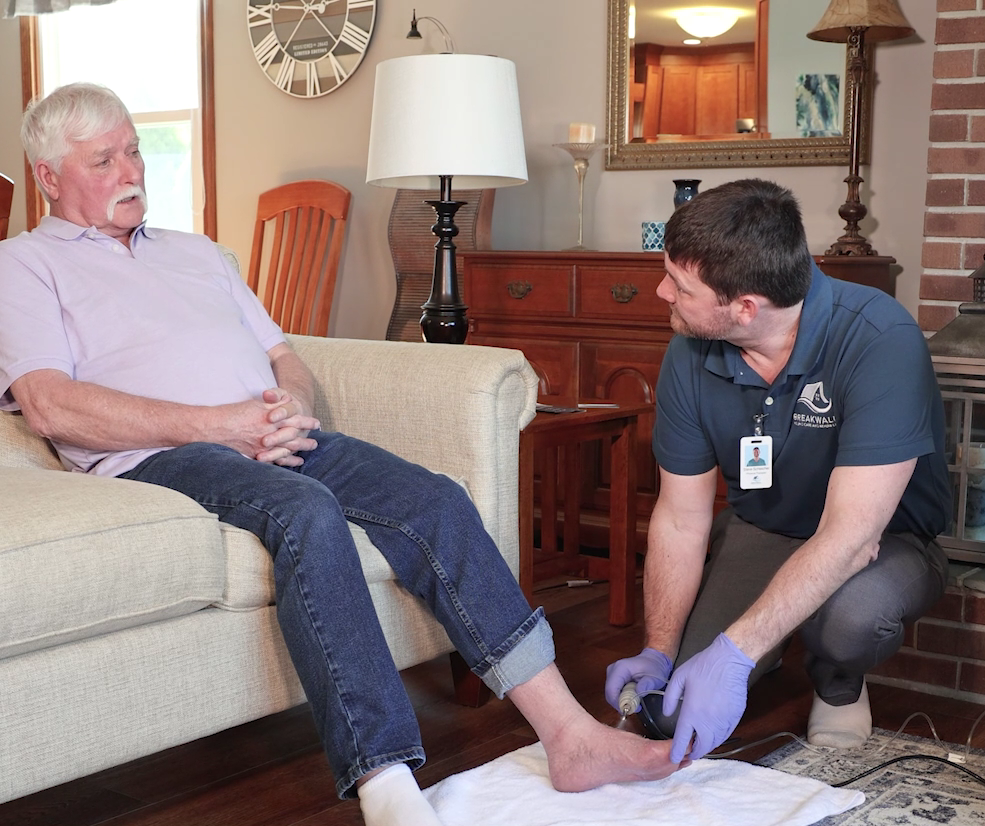
September is Healthy Aging Month, making it the perfect time to highlight the vital components of healthy aging and how in‑home physical therapy can play a powerful role in helping older adults thrive.
Aging Well Starts With Mobility
One of the strongest predictors of long‑term independence is mobility. When people can move confidently, they maintain control over their daily lives. Examples of confident movement:
- Walking steadily
- Transferring between sitting and standing safely
- Climbing stairs with sure‑footing
- Getting in and out of a car with coordinated movement
Physical therapy directly supports this through:
- Strength training to maintain muscle mass
- Balance and fall‑prevention work
- Gait training to improve walking mechanics
- Joint mobility and flexibility
- Endurance building for daily activities
Even small improvements in mobility can dramatically change someone’s safety, independence, and quality of life.
Mobility, Circulation, Wound Prevention, and Swelling Control
Confident, consistent movement does more than help someone walk, it acts as a natural pump for the body. Every step and muscle contraction helps to:
- Improve circulation, delivering oxygen and nutrients throughout the body
- Reduce pressure on fragile areas, lowering the risk of pressure injuries
- Move fluid out of the legs, supporting lymphedema and swelling management
- Support wound healing, because better blood flow improves tissue repair
When mobility decreases, circulation slows, pressure builds, and fluid collects in the body. Stubborn excess fluid decreases skin integrity, making wounds more likely to occur and making healing more difficult. Improving mobility is one of the most effective ways to support wound prevention, wound healing, and lymphedema management.
Healthy Aging Is Proactive, Not Reactive
Most people wait until something goes wrong before seeking help. But prevention is a vital part of healthy aging. Get proactive, not reactive.
Proactive PT can:
- Reduce fall risk by up to 40%
- Prevent chronic wounds caused by immobility
- Improve skin integrity and circulation
- Support fluid movement to reduce swelling
- Delay or avoid the need for assistive devices such as a cane or walker
- Help maintain safety and independence at home
Healthy aging is not about “fixing” decline. It’s about slowing it, stabilizing it, and strengthening around it.
Healthy Aging Includes Skin and Wound Health
As a Wound Care Certified clinician, I see firsthand how aging, swelling, and impaired mobility affect the skin. Changes such as thinning tissue, reduced circulation, and slower healing make older adults more vulnerable to wounds – especially pressure injuries, diabetic ulcers, and wounds related to swelling.
Healthy aging means:
- Protecting fragile skin
- Managing swelling and lymphedema
- Maintaining hydration
- Preventing friction and shear forces on the skin that cause skin tears
- Treating small issues before they become serious
When mobility improves, wound and swelling risk decreases. When wound healing improves and swelling decreases, mobility becomes easier.
Healthy Aging Means Staying Engaged in Daily Life
Independence isn’t just physical, it’s emotional and social as well. People who stay active in their daily routines and social routines experience:
- Better mood
- Maintained or improved cognition
- Lower stress
- Stronger community connections
- Reduced risk of early decline in strength, balance, and daily function
Physical therapy—and even more so, Occupational Therapy (emphasized for my wife, who is an occupational therapist!)—supports people in maintaining or returning to the activities that matter most, such as:
- Self‑care
- Cooking
- Gardening
- Caring for pets
- House chores
- Attending family and social events
- Enjoying outdoor activities
- Participating in hobbies
Healthy aging is about living, not just surviving.
Healthy Aging Happens Best at Home
For many older adults, the home environment is where independence is won or lost. In‑home PT offers advantages that clinic‑based care can’t match:
- Fall‑risk assessment in your own environment
- Personalized home‑safety recommendations
- Training in the exact environment where daily activities occur
- Reduced transportation barriers
- Increased comfort and convenience
Healthy aging is easier when care meets people where they are.
What Can You Do Now?
Try these quick healthy aging self-checks:
- Stand from a chair without using your hands on the chair or on your legs
- After standing, walk 10 feet, turn, and return to the chair
- Balance on one foot for 5 seconds (stand near a stable surface in case you need to catch your balance)
- Reach overhead comfortably and without losing your balance
- Step into and out of a bathtub or shower safely
If any of these are difficult, painful, or unsteady, it’s a sign that PT can help.
Final Takeaway
Healthy aging isn’t just about good genes or good luck. It’s about intentional movement, proactive care, and expert guidance.
Breakwall Wound Care and Rehab is here to work with you on your healthy aging journey.